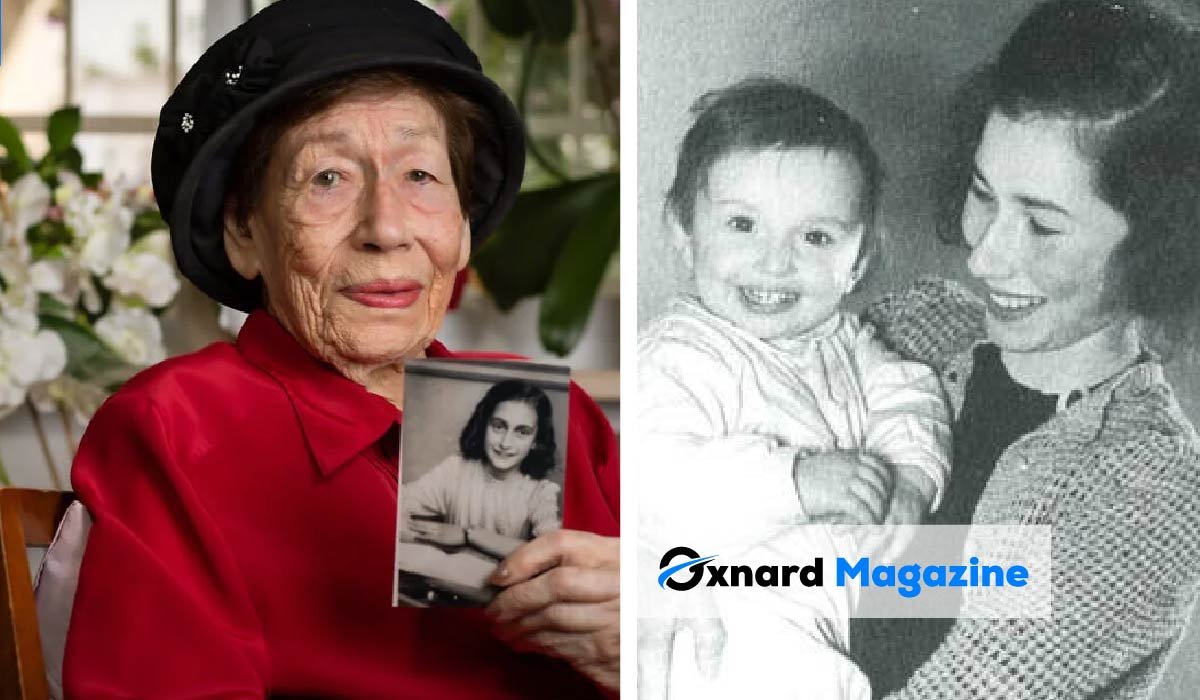
Gabi Goslar was a Holocaust survivor whose life shows both deep loss and quiet strength. She was born in 1940 in Amsterdam and is best known as the younger sister of Hannah Pick-Goslar, a close friend of Anne Frank. Gabi did not become famous by choice, but her story became important because she survived the Holocaust as a very young child. Her life helps us understand what children went through during the war. In this article, we will look at her early life, her family, her time during the Holocaust, and how she rebuilt her life after the war.
Quick Bio
|
|
| Full Name |
Rachel Gabriele Ida Goslar |
| Known As |
Gabi Goslar |
| Date of Birth |
October 25, 1940 |
| Place of Birth |
Amsterdam, Netherlands |
| Nationality |
Dutch-born, later Israeli |
| Religion |
Jewish |
| Ethnicity |
German-Jewish |
| Father |
Hans Yitzkhak Goslar |
| Mother |
Ruth Judith Klee |
| Sibling |
Hannah Elisabeth Pick-Goslar |
| Famous Connection |
Sister of Hannah Pick-Goslar (friend of Anne Frank) |
| Marital Status |
Married |
| Husband |
Mr. Mozes |
| Children |
Private |
| Holocaust Experience |
Westerbork, Bergen-Belsen, “Lost Train” survivor |
| Memoir |
I Have to Tell Someone (2010) |
| Death |
2017, Israel |
| Age at Death |
77 years |
Early Life and Family Background in Amsterdam
Gabi Goslar was born into a German-Jewish family that moved to Amsterdam to escape Nazi rule. Her parents hoped to live safely in the Netherlands and give their children a better future. At first, life seemed normal and calm. However, everything changed when the Nazis took control of the country. Jewish families began to face strict rules, discrimination, and growing fear. Gabi was still very young, but her early years were already shaped by these changes. What started as a search for safety quickly turned into a struggle for survival as the war spread across Europe.
Gabi Goslar’s Parents:
Gabi’s parents were educated and caring people who wanted to protect their family. Her father, Hans Yitzkhak Goslar, had worked in an important government role in Germany before escaping to the Netherlands. He tried his best to keep his daughters safe during the war. Her mother, Ruth Judith Klee, stayed at home and focused on raising the children. Sadly, she died in 1942 during childbirth. This was a huge loss for the family. After her death, Gabi’s father had to raise both daughters alone during a very difficult time. His efforts showed how much he cared, even in danger.
Gabi Goslar’s Famous Sister: Hannah Pick-Goslar
Gabi had one older sister, Hannah Pick-Goslar, who played a big role in her life. Hannah was much older and often acted like a second parent to Gabi. She protected and supported her during the hardest times. Hannah is also known because she was a close childhood friend of Anne Frank. This connection later brought attention to Gabi’s story as well. Even during the war, Hannah stayed strong for her younger sister. Their bond helped both of them survive. The relationship between the two sisters is an important part of Gabi’s life and shows the power of family support.
Tragedy in Childhood: Loss of Parents and War Impact
Gabi’s childhood was filled with loss at a very early age. She lost her mother when she was only two years old. Soon after, the war made life even more difficult for her family. Jewish families were no longer safe, and fear became part of everyday life. Later, Gabi also lost her father while they were imprisoned in a concentration camp. Losing both parents at such a young age was extremely painful. These events shaped her childhood in ways most people cannot imagine. Despite this, she continued to survive, showing strength even as a small child.
Holocaust Experience: Camps, Bergen-Belsen, and Survival
During the Holocaust, Gabi and her family were arrested and sent to camps. They were first taken to Westerbork and then moved to Bergen-Belsen. Conditions in the camp were very harsh. There was little food, poor shelter, and many people were sick. Gabi was still a young child and struggled with illness and hunger. Her father died in the camp, which made things even harder. Still, she survived with the help of her sister and kind people around her. Her survival in such conditions shows how strong she was, even at such a young age.
The “Lost Train” and Liberation in 1945
Near the end of the war, Gabi and her sister were placed on a transport known as the “Lost Train.” The journey was long and confusing, and the people on board suffered from hunger and illness. No one knew where the train was going. After days of uncertainty, Soviet soldiers found the train and freed the survivors. Gabi was only five years old at the time. She was weak and sick but alive. This moment marked the end of her time as a prisoner. It was the start of a new life, even though recovery would take time.
Life After the War: Recovery and New Beginnings
After being freed, Gabi and her sister were taken to a children’s home where they received care and treatment. They were both very weak and needed time to recover. Slowly, they began to feel stronger. Later, they moved to Switzerland to live with relatives who helped them rebuild their lives. This period was about healing, both physically and emotionally. Even though they had survived, the pain of losing their parents remained. Gabi had to grow up quickly and adjust to a new life. Still, she found hope and slowly moved forward.
Moving to Israel and Building a New Life
In 1949, Gabi Goslar moved to Israel as a young girl. For many survivors, Israel became a place to start again. There, she went to school and built a new life. As she grew older, she got married and started a family. Gabi chose to live quietly, focusing on her home and children. She did not seek attention, even though her past was powerful. Her life in Israel showed how someone can rebuild after deep loss. She created a peaceful and stable life, something she did not have during her early childhood.
Connection to Anne Frank Through Hannah Pick-Goslar
Gabi’s story is often linked to Anne Frank because of her sister Hannah. Hannah and Anne were close friends before the war. They even saw each other again briefly in Bergen-Belsen, separated by a fence. This moment became one of the most remembered stories from the camp. Although Gabi was too young to know Anne personally, this connection made her story more widely known. It also helped people understand that many families went through similar experiences. This link continues to keep Gabi’s story connected to the history of the Holocaust.
Memoir and Voice: I Have to Tell Someone
In 2010, Gabi Goslar shared her story through her memoir I Have to Tell Someone. In this book, she wrote about her experiences as a child during the Holocaust. Her words are simple but powerful, helping readers understand what she went through. The book is important because it gives a voice to children who suffered during the war. It also helps keep history alive for future generations. By telling her story, Gabi made sure that the past would not be forgotten. Her memoir remains an important part of Holocaust education today.
Legacy, Death, and Historical Importance
Gabi Goslar passed away in 2017 at the age of seventy-seven. She is remembered as a survivor who helped keep the memory of the Holocaust alive. Her life shows how someone can go through great suffering and still build a meaningful future. She did not live for fame, but her story became important because it teaches valuable lessons. Her experiences remind us of the dangers of hate and the importance of kindness. Today, her story continues to educate people and encourage them to remember history.
Final Words
Gabi Goslar’s life is a powerful example of survival and strength. She faced loss, fear, and hardship as a child but still found a way to live a full life. After the war, she built a family and shared her story with the world. Her journey teaches us about hope, even in the darkest times. By remembering her life, we also honor the millions who did not survive. Her story encourages us to be more understanding and kind. It reminds us why it is important to learn from history and never forget what happened.
FAQs
Who was Gabi Goslar?
Gabi Goslar was a Holocaust survivor born in 1940 in Amsterdam. She is known as the younger sister of Hannah Pick-Goslar. She survived Bergen-Belsen and later shared her story through her memoir, helping preserve Holocaust history.
How is Gabi Goslar connected to Anne Frank?
Gabi Goslar is connected to Anne Frank through her sister Hannah Pick-Goslar, who was one of Anne’s closest childhood friends. This connection links Gabi’s story to one of the most well-known accounts of the Holocaust.
What happened to Gabi Goslar during the Holocaust?
During the Holocaust, Gabi was arrested with her family and sent to camps including Westerbork and Bergen-Belsen. She faced hunger, illness, and the loss of her father but survived as a young child.
What is the “Lost Train” in Gabi Goslar’s story?
The “Lost Train” refers to a transport carrying prisoners away from Bergen-Belsen in 1945. Gabi and her sister were on this train and were eventually rescued by Soviet forces, marking their freedom.
Did Gabi Goslar write a book about her life?
Yes, Gabi Goslar wrote a memoir titled I Have to Tell Someone in 2010. In the book, she shares her childhood experiences during the Holocaust and highlights the importance of remembering history.
You May Also Read: Natalie Michelle Cummings: The Untold Story of Maureen McCormick’s Only Child